
HPA Systems for Airsoft: A Comprehensive Guide
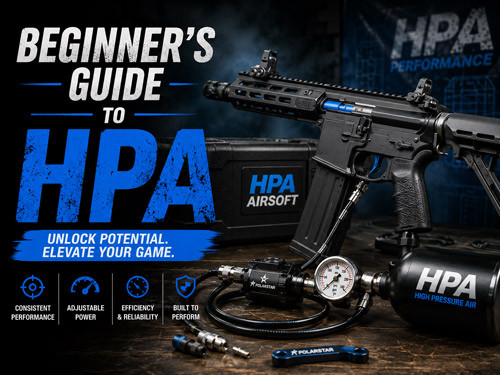
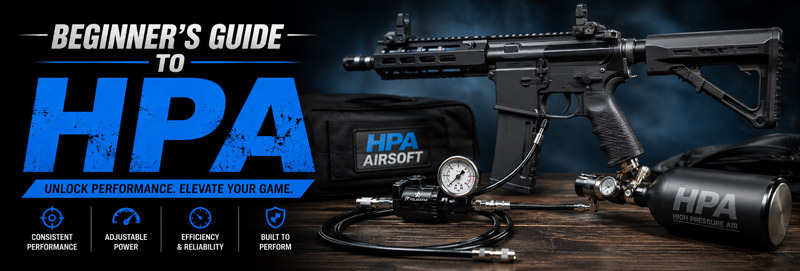
HPA Airsoft: Beginner's Guide to High-Pressure Air in UK Airsoft
If you've spent any time around airsoft fields in the UK, you've probably noticed players running external air lines and tanks on their rifles. That's HPA - and it's one of the fastest-growing power systems in the sport. This article covers everything a new person needs to know before getting started with high pressure air, from how it works to what it costs.
Key Takeaways
HPA systems replace traditional springs or gas normally used in airsoft guns, with regulated compressed air, delivering consistent fps that is practically unmatched by other airsoft platforms. Instead of relying on a gearbox or green gas magazine, a regulated stream of air powers each shot at a set velocity, giving you fast trigger response and very tunable performance.
A realistic starter setup in the UK - covering the rifle, regulator, line, and a 13–48ci hpa tank plus a micro battery if needed - typically costs around £650–800 for beginners. Purpose-built platforms like the Wolverine MTW push that figure higher, while converting an existing AEG keeps costs closer to the lower end.
The main advantages are outstanding consistency, tunability, and reliability in cold weather. The drawbacks include higher upfront cost, reliance on air tanks and fill stations, and the stigma that "HPA ruins the sport" when players misuse it. HPA does not automatically mean cheating - responsible UK airsoft players still follow site joule and FPS limits, use joule creep-safe setups, and chrono their hpa rifles like any other platform.
What Is HPA in Airsoft and How Does It Work?
HPA stands for high pressure air. It uses compressed air stored in a tank at 3000–4500 PSI, regulated down to a working output of 60–140 PSI, to power airsoft guns instead of springs, gas, or AEG gearboxes.
A complete hpa airsoft setup includes four core components:
-
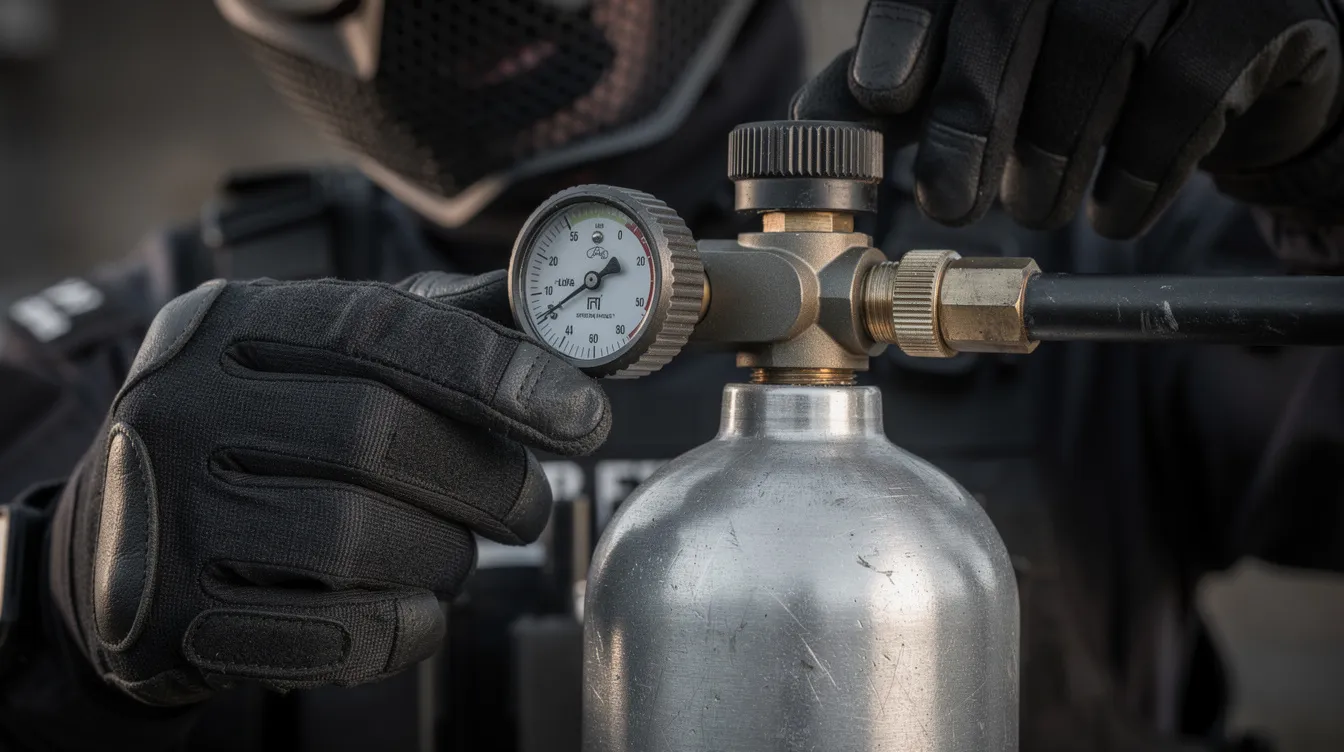
HPA Tank - e.g. a 48ci 3000 PSI aluminium bottle storing the air
-
Regulator - drops tank pressure to a usable 60–140 PSI output
-
Air line - a braided hose connecting the reg to the rifle
-
HPA engine - the internal unit that uses regulated air to fire the BB
The airflow path is simple: air stored in the tank passes through the regulator, travels along the line, enters the hpa engine inside the airsoft replica, and pushes the BB pellet down the barrel at a set velocity. Hpa systems operate at 60–140 PSI for consistent performance regardless of temperature or battery charge.
There are two main types of HPA engines. Electro-pneumatic engines (like the Wolverine INFERNO Gen 2 or Polarstar F2) use an FCU and a small battery to control fire modes and dwell. Mechanical engines (Kythera-style or MechLabs XX-Mod) need no battery at all - the trigger directly actuates a pneumatic valve.
Some platforms are purpose-built around HPA, such as the Wolverine MTW series, while others are conversion kits designed to drop into standard AEG or GBB rifle shells.
Quick tuning example: a 1-joule cqb build might run ~80 PSI on 0.25g BBs, while a 1.13-joule woodland build on 0.28g BBs would need slightly higher pressure - around 110–130 PSI. That adjustability is what makes tuning so appealing.
Is HPA Good for Airsoft – Pros, Cons and "Does It Ruin the Sport?"
HPA is neither automatically overpowered nor bad for the sport. It's a tool whose impact depends entirely on how responsibly each person uses it.
Benefits:
-
Shot-to-shot FPS consistency unmatched by other airsoft systems - no spring fatigue, no gas cooldown
-
Instant trigger response and programmable fire modes (electro-pneumatic builds)
-
HPA allows precise tuning to meet site joule limits by adjusting regulator pressure
-
Robust performance in cold UK winters, where green gas platforms struggle
-
HPA engines can achieve up to 50 rounds per second on compatible setups
Common criticisms:
-
Perception of overshooting due to high rate of fire
-
Some players exploit joule creep by running heavier BBs without re-chronoing
-
The visible air line and tank look break immersion for milsim players
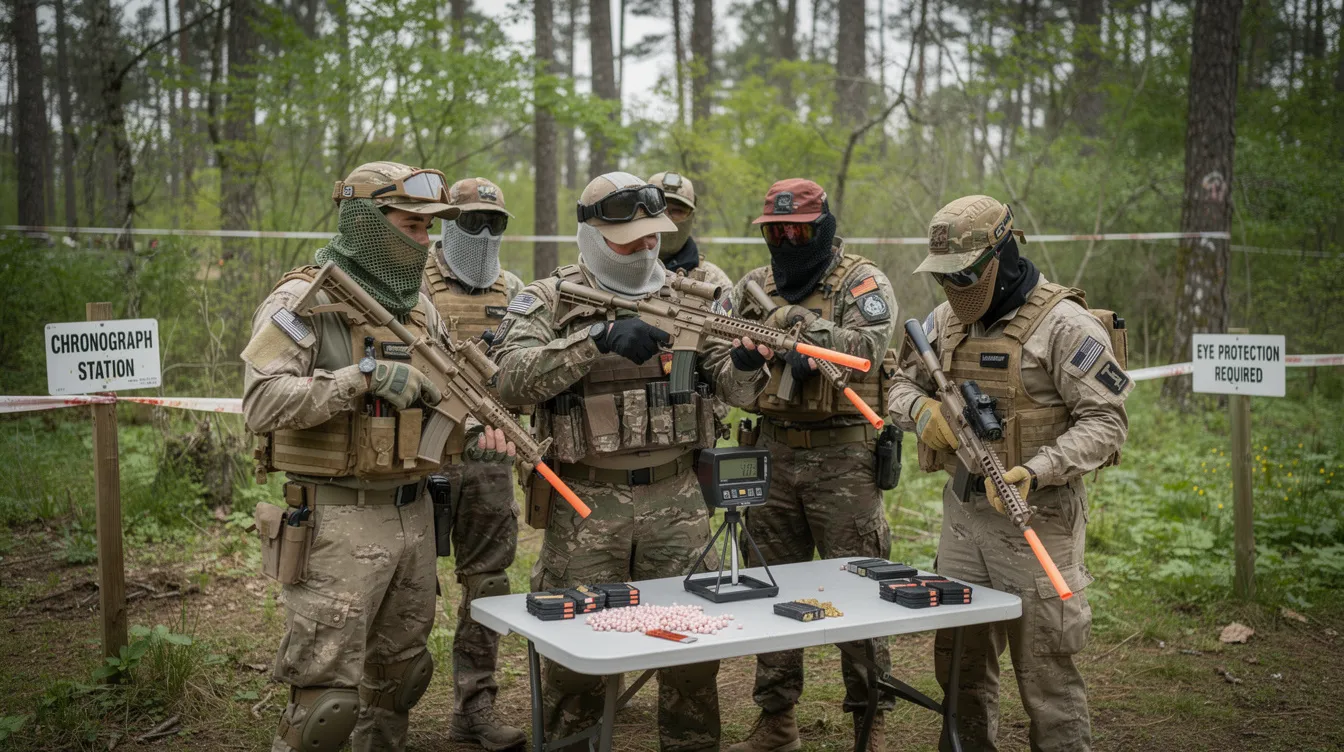
Does HPA ruin airsoft? Any platform can be abused. Problems come from player behaviour, not the technology itself. UK sites chrono hpa rifles under the same energy limits as AEGs - typically 1.13J for rifles, 1.64J for DMRs, and 2.3J for bolt-action snipers. Many venues require regulators to be locked after chrono, and some disable binary or high-ROF fire modes entirely.
For new airsoft players, HPA is ideal if you value consistency and are prepared for extra equipment. Otherwise, a decent AEG rifle may be a better first step.
Core Parts of an HPA Setup (Engines, Tanks and Lines)
Every HPA build - from a budget conversion to a top-tier Wolverine MTW - is built from the same HPA building blocks.
HPA engines come in two flavours. Electro-pneumatic engines (Wolverine INFERNO Gen 2, Polarstar F2) include an FCU powered by a small 7.4V LiPo battery. Mechanical engines (MechLabs XX-Mod, Kythera-style) eliminate the need for batteries or FCUs entirely, relying on a purely mechanical trigger. Hpa systems that use mechanical engines are often preferred by players who want simplicity.
HPA tanks and air tanks are your air supply. Common entry choices are aluminium 13ci and 48ci tanks rated at 3000 PSI. For longer woodland skirmishes, a 68ci 4500 PSI carbon fibre tank saves weight while holding more air. Tanks are usually shipped empty in the UK for courier safety.
Regulators and lines complete the air system. A low-pressure regulator (0–150 PSI output range) with Foster-style QD fittings sits on the tank. Braided or wide-bore hpa lines - typically 36″ or 42″ - run from the reg to the replica. Line compatibility with your engine's fittings matters, so check before you add products to your cart.
Most electro-pneumatic builds also need a micro LiPo battery to power the FCU, while mechanical engines avoid that requirement altogether.
HPA Engine Choices and Platforms (Including Wolverine MTW)
Beginners usually face one decision: buy a purpose-built hpa rifle or convert an existing AEG with a drop-in engine.
Purpose-built platforms like the wolverine mtw Billet Tactical series (7″ CQB, 10″ SBR, 14″ Carbine, MTW-308 DMR) are designed around the HPA engine from the factory. That means perfect nozzle alignment, efficient air use, and fewer compatibility headaches. Lightweight speedsoft builds like the Heretic Labs Article series pair skeletonised receivers with INFERNO engines for sub-1.3 kg rifles and extreme ROF.
Conversion options include V2/M4 drop-in kits (INFERNO Gen 2, Polarstar F2) for standard M4 AEGs, mechanical conversions (MechLabs XX-Mod), and pistol or GBB conversions using HPA magazine adapters for platforms like the AAP-01 or Hi-Capa.
|
Path |
Best For |
Typical Cost |
|---|---|---|
|
Purpose-built (MTW) |
"Buy once, cry once" reliability |
£770–£1,100 |
|
AEG conversion |
Players who love their current rifle |
£500–£650 |
|
Pistol HPA adapter |
CQB or cold-weather sidearms |
£150–£300 |
Most hpa platforms in the UK use standard AEG M4 magazines or compatible SR25 mags, keeping magazine costs low and stock widely available.
Costs of Getting into HPA Airsoft in the UK (with GBP Examples)
Moving to HPA usually costs more upfront than buying a mid-range AEG, but running costs per game can be lower - especially compared with constant gas purchases. An entry-level HPA setup costs around £650–800 depending on your build path.
Typical 2024–2026 UK price ranges:
|
Component |
Price Range (GBP) |
|---|---|
|
Drop-in HPA engine kit |
£250–£450 |
|
Complete HPA rifle (e.g. MTW) |
£450–£900 |
|
HPA tank (aluminium 13–48ci) |
£60–£220 |
|
Regulator |
£80–£160 |
|
Braided HPA line |
£25–£60 |
|
QD fittings and accessories |
£10–£25 |
|
Micro LiPo battery (if electro-pneumatic) |
£10–£25 |
Example build 1 - AEG conversion: engine (£380), regulator (£90), line (£40), 48ci 3000 PSI tank (£150), battery (£15). Total: ~£675.
Example build 2 - Wolverine MTW starter: rifle with included engine (~£800), tank/reg/line bundle (~£200), battery (~£15). Total: ~£1,015.
Ongoing costs are modest: occasional O-ring and seal replacement, periodic hydro-testing of hpa tanks (typically every five years), and fill fees at sites - often included in your game day fee or just a few pounds in the UK.
Filling and Using HPA Tanks Safely in the UK
Hpa tanks store air at very high pressure and must be treated with the same respect as dive or paintball cylinders. The good news: they're straightforward to manage with basic rules.
Common tank sizes:
-
13ci 3000 PSI - compact micro tanks for stock-mounted CQB builds
-
48ci 3000 PSI - the go-to aluminium tank for most players
-
68ci 4500 PSI - carbon fibre for long skirmish days, lighter despite larger capacity
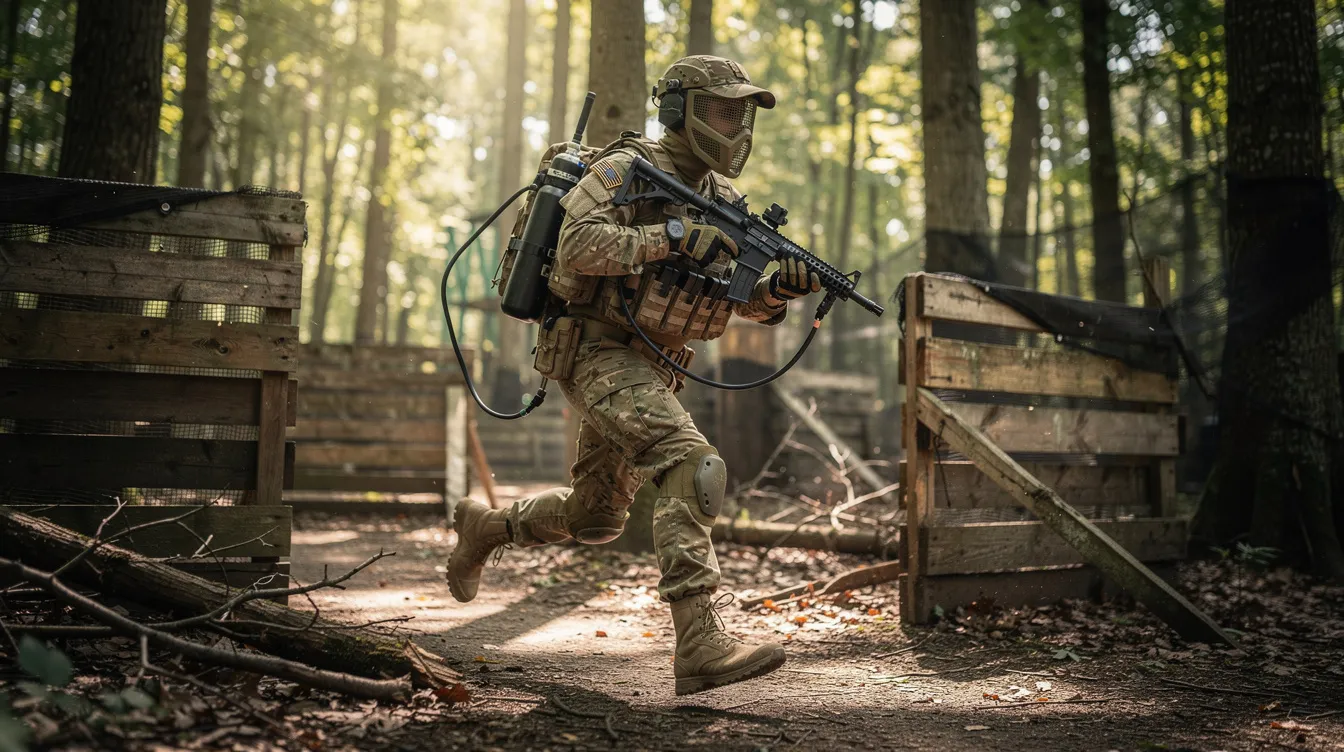
HPA tanks must be filled at certified fill stations. UK players typically fill at on-site fill stations at skirmish venues, local paintball centres, or diving shops that support 3000–4500 PSI air fills. Many sites catering to the growing hpa uk scene now have dedicated on-site air.
Filling step-by-step:
-
Ask site staff to demonstrate if it's your first time
-
Connect the fill whip to your tank's valve
-
Open the valve slowly - never exceed the tank's rated PSI
-
Close the valve and use the bleed valve before disconnecting
Safety essentials: never tamper with tank valves, avoid heat and impacts, check hydro-test dates regularly, and replace damaged O-rings or gauges promptly. HPA tanks do not require a special licence in the UK, but they must be safely transported - ideally depressurised for courier shipping - and used within manufacturer limits.
Getting Started: Building Your First HPA Loadout
You don't need the most expensive setup on day one. Start simple with a reliable rifle and a single air system that suits your local sites. Every experienced player started exactly where you are now.
Decision path:
-
Choose your gameplay style - speedsoft or cqb vs outdoor woodland or milsim
-
Choose your platform - purpose-built HPA rifle or convert your current AEG
-
Choose your air system - tank size, regulator, and line based on game length
CQB example: short-barrel HPA rifle or pistol-HPA with a 13ci tank in a stock or backpack, tuned to ~1J on 0.25g BBs, focusing on fast trigger response and moderate ROF.
Woodland example: 10–14″ hpa rifle with a 48ci or 68ci tank, tuned to site rifle limit (e.g. 1.13J on 0.28g BBs), prioritising consistency and range over extreme ROF.
To chrono and tune, adjust your regulator PSI in small increments and test with the BB weight you'll actually use. Account for joule creep - heavier BBs can push energy higher even at the same pressure setting. Record your final PSI and joule values for future reference.
First game checklist:
-
Test for leaks at home before game day
-
Bring spare O-rings and PTFE tape
-
Fully charge your battery (if electro-pneumatic)
-
Fill your tank or confirm your site offers fills
-
Re-chrono after any significant adjustments
FAQ: Common Beginner Questions About HPA Airsoft
These cover extra beginner concerns that frequently come up once players start looking seriously at HPA as a subject worth investing in.
Do I need a firearms licence or special certificate for HPA tanks in the UK?
No. Hpa systems do not require special licenses in the UK. Your HPA airsoft rifles are still classed as Realistic Imitation Firearms (RIFs) and fall under the same defences as AEGs - hpa rifles require a valid UKARA defence to purchase, just like any other realistic replica. HPA tanks themselves are treated similarly to paintball and dive cylinders: they must be in test, handled safely, and filled by appropriate equipment, but there is no additional personal licensing for standard airsoft use.
How long will a single HPA tank last in a game?
A 48ci 3000 PSI tank on a well-tuned 1J rifle typically provides 1,500–2,500 shots. A compact 13ci 3000 PSI tank may offer 500–1,000 shots depending on efficiency and ROF. Variables that affect air consumption include nozzle dwell, PSI settings, barrel length, and whether you're running semi-auto or full-auto heavy speedsoft play. Beginners should start with a mid-size tank like 48ci 3K or 68ci 4.5K if they regularly empty several mid-cap mags per game.
Can I use my HPA setup at any airsoft site in the UK?
Most established UK sites now allow hpa rifles, but each site sets its own rules about joule limits, binary fire, DMR classifications, and minimum engagement distances. Always check in advance: confirm the site offers HPA fills, ask about tank pressure restrictions (3000 vs 4500 PSI), and find out whether they require regulators to be locked or taped after chrono. Some milsim events may also have cosmetic rules discouraging obvious speedsoft builds.
Is HPA harder to maintain than an AEG?
The internal HPA engine usually has fewer moving parts than an AEG gearbox and can be very reliable once properly set up. The external system - tanks, regulator, line - needs occasional checks for leaks and O-ring wear. Keep filters and fill nipples clean, inspect lines for damage, store tanks with a little residual pressure to keep seals seated, and follow manufacturer service intervals. HPA is different rather than harder: less gearbox teching, more attention to air system health.
Latest News

Top Airsoft Apparel for Comfort and Performance on the Field
Airsoft Apparel: How to Choose the Right Airsoft Clothing and Gear That Perform Under Fire Key Takea...

What is Airsoft?
What is Airsoft? The game of airsoft skirmishing ("BB war", "survival wargaming") is, to describe i...

Helmet for Airsoft
How to Choose, Set Up and Use Your Airsoft Helmet Whether you play indoor airsoft CQB every weekend...